Hungary, Slovenia & Croatia
2026
Taking in Gyor & Esztergom on the way to Budapest. Then Balaton Lake on the way to our favorite vinyard, Puklavec, Jeruzalen, Slovenia, where we celebrate Esthers birthday, before joining Beck, Filip and Lily in Sibenik, Croatia for a week. Finally Zagreb, for the Croatian Masters, where we swap the Womo with Fiona&Alex for a car to take us home.
Route
- Home
- Gyor, Hungary
- Esztergom, Hungary
- Vizerad, Hungary
- Budapest, Hungary
- Puklavic, Zavasci, Slovenia
- Sibenik, Croatia
- Zagreb, Croatia
Gyor
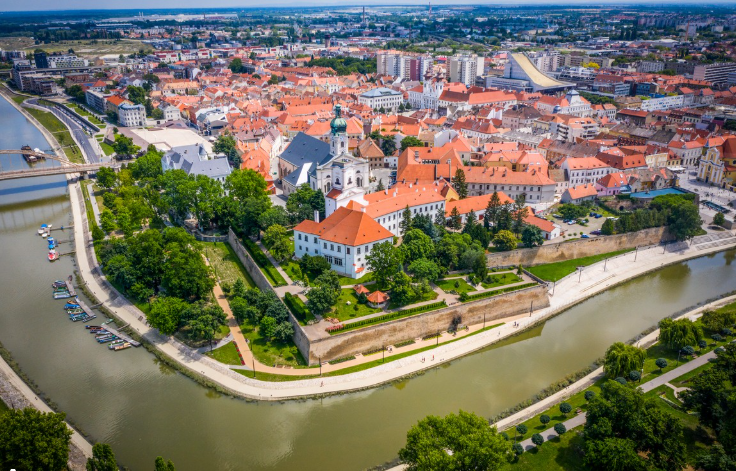
The ancient core of the city is Káptalan Hill at the confluence of three rivers: the Mosoni-Danube, Rába, and Rábca. Püspökvár, the residence of Győr's bishops, can be easily recognized by its incomplete tower. Győr's oldest buildings are the 13th-century dwelling tower and the 15th-century Gothic Dóczy Chapel. The cathedral, originally in Romanesque style, was rebuilt in Gothic and Baroque style.
Other sights include:
- Town Hall
- Benedictine church of St. Ignatius of Loyola
- Carmelite church
- Museum of Roman Archaeology
- Jedlik fountain[17]
Camping: Park4Night shows a lot of options eg:
- 2 Kiss Ernő utca, next to Spa, 10 minutes walk to centre, <1€/hour
Esztergom
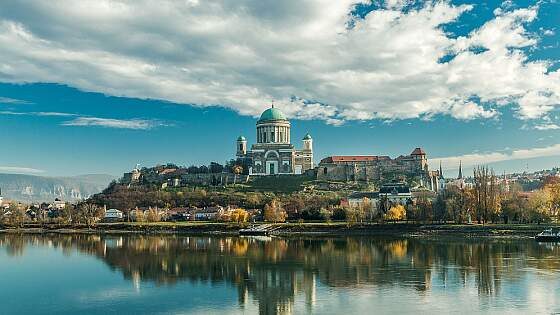
Esztergom is a historic city in northern Hungary, situated on the right bank of the Danube River directly across the border from Štúrovo, Slovakia.
- Basilica: Hungary's largest church and tallest building, featuring an 118-meter-high dome and the world's largest painting on a single canvas.
- Castle: Built originally in 1070 on Roman foundations, this reconstructed site showcases permanent exhibitions of pottery, coins, weapons, and architectural fragments detailing the region's royal and medieval history.
- Maria-Valeria-Bridge: An iconic structure linking Esztergom with the Slovakian town of Štúrovo.
Campsites:
- Gran Camping between Danube & town centre, walking distance to Basilica, €28
- Overnighting appears possible at quite a lot of relatively central parking lots.
Vizegrad
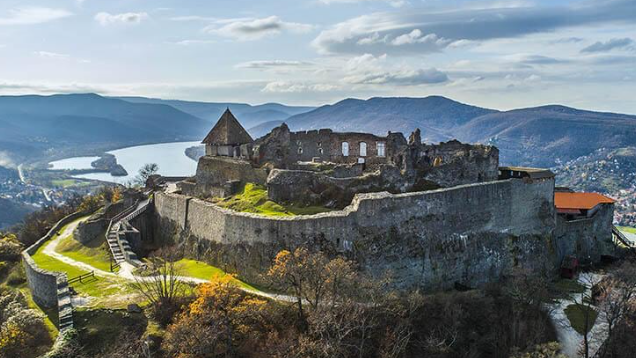
Visegrád is a castle town in Pest County, Hungary. It is north of Budapest on the right bank of the Danube in the Danube Bend. It had a population of 1,864 in 2010. The town is the site of the remains of the Early Renaissance summer palace of King Matthias Corvinus of Hungary and a medieval citadel.
Entrance: €4 for pensioners
Budapest
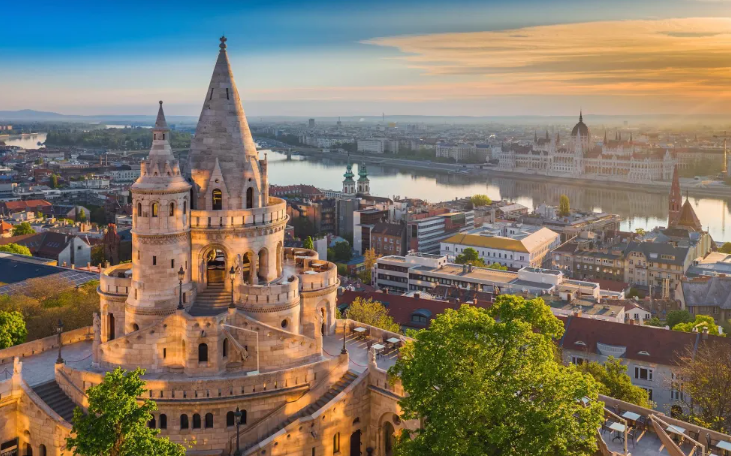
capital and largest city of Hungary. It is home to roughly 1.7 million residents. The iconic Danube River bisects the metropolis into two distinct districts: hilly Buda on the west and flat Pest on the east. Officially founded in 1873 through the unification of Buda, Óbuda, and Pest, the city serves as Hungary's central political, commercial, and cultural hub.
Other sights include:
- Parliament Bulding: The domed neo-Gothic structre was inspired by the British House of Parliament and serves as both a vibrant government center and a proud city landmark on the banks of the Danube.
- Fishermans Bastion: Built during the 19th century for the Hungarian Millennium celebrations, this mock bastion features pointed towers and turrets, reminiscent of the fairytale castles in Disney World.
- Szechenyi Baths and Pools: Neo-Baroque spa complex that has been around for over a century. With 15 indoor pools, saunas, massage and facial facilities, and three outdoor pools featuring whirlpools and water jets, there's plenty of relaxation to be had. The mineral-rich hot springs that feed the pools are believed to have therapeutic benefits, too. Unique experiences include the beer spa and the summer 'Sparty', a mega party held on the premises. Get there early for fewer crowds, and don't forget to bring your own towel and flip-flops. To skip the lines, consider booking a tour, which may even include a massage.
Camping:
- Stellplatz Budapest Fairly central, U-Bahn, €25-€36
- Park and ride round the corner from Stellplatz Budapest: €6, feels just as secure
- Budapest - 5 Tüzér utca: Central, €30 + €5 electricity
Lake Balaton
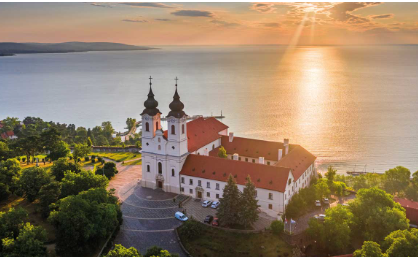
Lake Balaton is a freshwater lake in western Hungary. It’s a major holiday destination with beaches, volcanic hills, resort towns and high-rise hotels along its 197km shoreline. The hilly north shore is a wine-growing region, with protected wetlands and hiking trails at Balaton Uplands National Park. The town of Veszprém has a walled Castle district, and 13th-century frescoes at the Gizella Chapel.
- Basilica: Hungary's largest church and tallest building, featuring an 118-meter-high dome and the world's largest painting on a single canvas.
- Castle: Built originally in 1070 on Roman foundations, this reconstructed site showcases permanent exhibitions of pottery, coins, weapons, and architectural fragments detailing the region's royal and medieval history.
- Maria-Valeria-Bridge: An iconic structure linking Esztergom with the Slovakian town of Štúrovo.
Camping: lots to chose from on the lively southern shore or the scenic, volcanic northern shore. eg
- Balatontourist Füred: €25 with ACSI
- Balatontourist Camping Napfény: €23 with ACSI
Zagreb
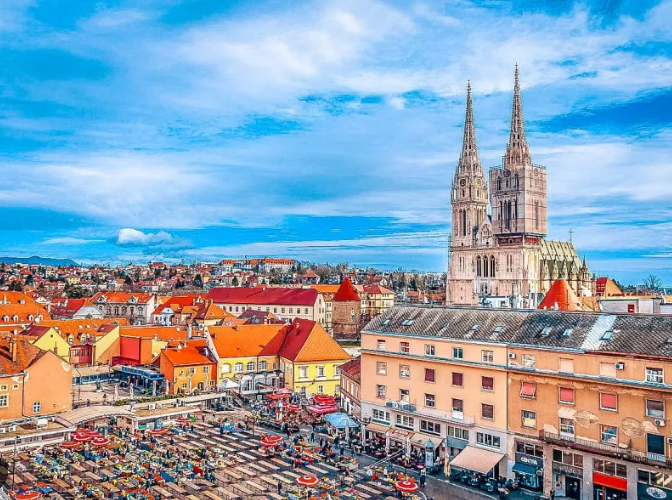
Croatia’s northwestern capital, is distinguished by its 18th- and 19th-century Austro-Hungarian architecture. At its center, Upper Town is the site of the Gothic, twin-spired Zagreb Cathedral and 13th-century St. Mark’s Church, with a colorfully tiled roof. Nearby is pedestrian-friendly Tkalčićeva Street, lined with outdoor cafes. Lower Town has the main square, Ban Jelačić, plus shops, museums and parks.
I've registered for the Croatian Masters Squash Tournament. and asked the organisers where to park. Camp Zagreb is 25 minutes drive (19km) or 70 minutes by public transport from the suash club!